
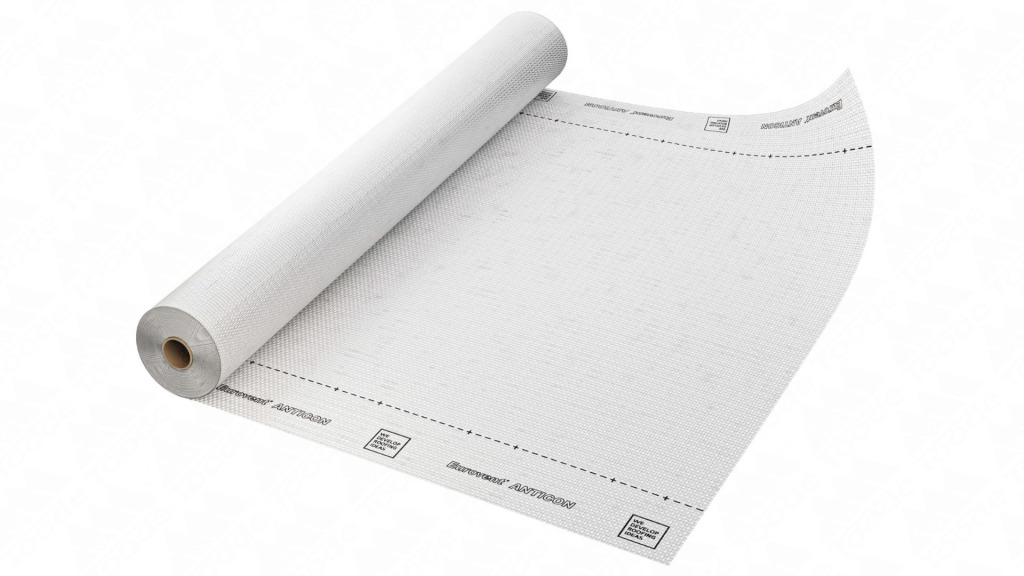
Anti-condensation underlay TOODE ANTICON 130

Toode by Eurovent ANTICON 130 is a multi-layer anti-condensation roofing underlay for ventilated pitched roof structures. The membrane is made from a combination of polymer non-woven material and fabric that can absorb excess moisture and reduce condensation.

The product is distributed under the Toode by Eurovent label, giving authorised supply to the Latvian market.

Only the 130 g/m² version is offered.


Structure and how it works

ANTICON 130 absorbs the condensation that forms on the inner surface of the roof and gradually releases it through ventilation.

Important: the membrane is designed for ventilated structures, and a ventilation gap of at least 5 cm must be left between the underlay and the insulation. The material must not be laid directly on the insulation.

Not designed for fully boarded structures.


Technical specifications

  • Weight: approx. 130 g/m²
  • Watertightness: class W1
  • Sd value: approx. 40 m
  • Vapour permeability: approx. 1 g/m² / 24h
  • Tensile strength (MD): ≥410 N / 50 mm
  • Tensile strength (CD): ≥390 N / 50 mm
  • Tear resistance: ≥460-470 N
  • Temperature resistance: from -40 °C to +80 °C
  • UV stabilisation: up to 2 months (laboratory conditions)

Technical data according to the manufacturer’s documentation.


Available roll size

  • 1,5 × 50 m (75 m²)

The roll covers larger roof areas efficiently with optimal material use.


Use

  • For ventilated pitched roofs
  • For structures with or without insulation
  • Under metal roofing where there is a risk of condensation

The final roofing must be installed on a batten and counter batten system.


Storage and installation

  • The roofing must be installed within 4 weeks of laying the underlay
  • Insulation or attic fill must be installed within 12 weeks
  • Store in a dry place protected from UV radiation
  • Transport in a covered vehicle

The warranty is valid when the manufacturer’s technical requirements are followed.

ANTICON 130 or a breather membrane – what is the difference?

Both Toode by Eurovent ANTICON 130 and breather membranes (for example MAXI 140 or SUPER 180) serve as a roof underlay, but they work and are used in very different ways.


Vapour permeability

Breather membrane:

  • Very high vapour permeability (low Sd value ~0.02 m)
  • According to the manufacturer, it can be laid directly on the insulation (we at TOODE still recommend a gap of a few centimetres)
  • Moisture passes freely through the membrane

ANTICON 130:

  • Low vapour permeability (high Sd value)
  • A ventilation gap is needed between the underlay and the insulation
  • Moisture is absorbed into the material and later dries out through ventilation

Structural requirements

Breather membrane:

  • No ventilation gap is needed between the membrane and the insulation
  • Suitable for modern, energy-efficient structures
  • Suitable for both ventilated and fully boarded roofs

ANTICON 130:

  • Ventilation gap required (min. 5 cm)
  • Not designed for fully boarded structures
  • Suitable for ventilated metal roofs

Main function

Breather membrane:

  • Protection against water and wind
  • Removing moisture from the structure

ANTICON 130:

  • Absorbing condensation on the underside of metal roofs
  • Temporary moisture storage until it dries out through ventilation

When to choose which?

✔ Choose a breather membrane if:

  • the roof structure is insulated
  • high vapour permeability is needed
  • you are building an energy-efficient building

✔ Choose ANTICON 130 if:

  • the roof is a ventilated metal roof
  • the main risk is condensation under the metal roofing
  • the structure is not fully boarded

Summary

Breather membranes are designed to remove moisture from the structure, while ANTICON 130 is designed to absorb condensation in ventilated roof systems. Choosing the right material is essential for the life of the roof and the safety of the structure.