

About snow guards – where are they needed, how many and which ones to choose?
In Latvian winters, snow that builds up on roofs can pose a serious danger both to people and to the building itself. When it slides off uncontrolled, snow and ice can damage the rainwater system, cars, terraces, plants and anything else under the roof overhang. That is why correctly chosen and installed snow guards are an important part of any roof’s safety.
As well as keeping people safe, snow guards also protect the gutters. A particularly dangerous situation arises in spring, when a thick layer of snow on the roof suddenly starts to slide down. One cubic metre of wet snow can weigh as much as 300–400 kg, so the force of such a mass is very large.
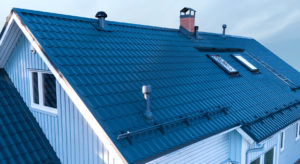
Where are snow guards needed?
Snow guards should be installed where sliding snow could endanger people or damage property. They are most often installed:
- above building entrances;
- above footpaths;
- above garage doors;
- above terraces and balconies;
- above lower roof slopes;
- where there are gutters under the roof edge.
Snow guards are particularly important on roofs with several slopes at different heights, as ice sliding off the upper roof can seriously damage the roofing below.
Correct gutter installation
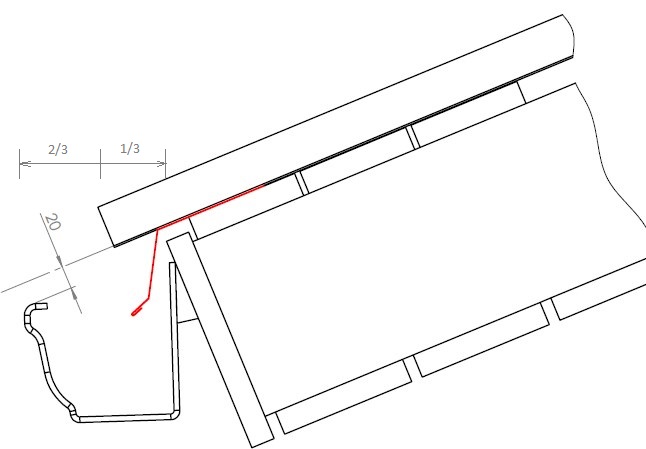
Even the best snow guards cannot fully protect gutters if they are installed incorrectly. If you imagine extending the roof slope beyond the eaves, the top edge of the gutter should be below this line. That way sliding snow passes over the gutter instead of catching in it.
If the gutter is installed too high, the mass of snow gets stuck in it and can bend or even tear off the whole rainwater system together with its brackets.
Which snow guards to choose?
There are two most popular solutions:
- Tubular snow guards – the strongest and safest solution for metal, standing seam and tile roofs. They withstand heavy loads well and do not collect leaves, twigs or other debris.
- Sheet snow guards – a more economical solution for profiled metal roofs with a low pitch. They are not intended for Classic or standing seam roofs and can deform under heavy snow loads.
If the roof slope is long (over 10 metres), we recommend installing snow guards in two or more rows to spread the snow load more evenly.
View snow guards for metal, tile and fibre cement roofs →
When does snow need to be cleared from the roof?
Roofs on new buildings are designed with a safety margin, but extreme snow loads can still increase the risk. Particular care is needed by:
- owners of older buildings;
- buildings whose structural load-bearing capacity is unknown;
- roofs with a low pitch;
- light structures and canopies.
Snow should be removed evenly, without creating large piles in one place, and there is no need to clear the roof right down to the roofing.
Icicles are a sign of heat loss
Icicles do not form without a reason. They usually point to insufficient roof insulation or air leaks. Warm air melts the snow, the water runs down to the eaves and freezes there.
If icicles form regularly, we recommend checking the roof insulation and cleaning leaves and other debris out of the gutters before winter.
Do you know when snow really needs to be cleared from the roof?
Snow guards help control sliding snow, but even on a well-equipped roof it is important in winter to assess the snow load, watch for the risk of icicles and keep the rainwater system clean. Read our practical guide to using your roof safely in winter.
Need help choosing the right snow guards?
TOODE supplies snow guards for metal, clay and concrete tile and asbestos-free fibre cement roofs, as well as all the fixings needed for safe installation.

