

Snow on the roof – when does it become dangerous and how can you protect your home in winter?
Winter brings not only beautiful scenery but also extra load on the roof. Built-up snow, ice and icicles can endanger people, damage the rainwater system and shorten the life of the roof. Checking the roof in good time and fitting suitable safety elements helps you avoid expensive repairs and unpleasant surprises in spring.
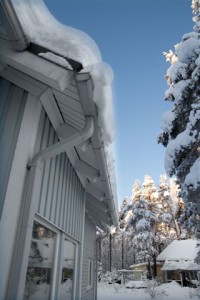
When does snow on the roof become dangerous?
The greatest risk is for older buildings, light structures, canopies, buildings with a low roof pitch and roofs whose load-bearing capacity is unknown. Pay particular attention to wet snow – it is several times heavier than freshly fallen snow.
The widely quoted advice to clear the roof once there is 40 cm of snow is not universal. More important than the depth of the snow is its weight, the roof structure and the technical condition of the building in question.
How to assess the snow load?
According to standard EVS-EN 1991-1-3, wet snow can weigh as much as 400 kg/m³. For example, a 40 cm layer of wet snow creates a load of approximately 160 kg/m². If you have any doubts about the load-bearing capacity of the roof, it is best to remove excess snow in good time.
- Clear the snow evenly.
- Do not create large piles of snow in one place.
- There is no need to clear the roof right down to the roofing.
Icicles are not just a cosmetic problem
Icicles form when warm air escaping from the building melts the snow on the roof. The meltwater freezes at the eaves and forms ice. This points to heat loss or insufficient roof ventilation.
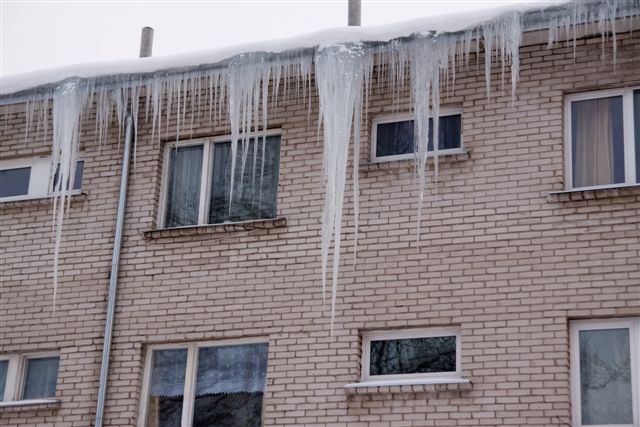
What causes icicles to form?
- Insufficient roof insulation.
- Poor or damaged vapour barrier.
- A warm chimney in a cold attic.
- Roof windows and complex roof details.
- Blocked gutters.
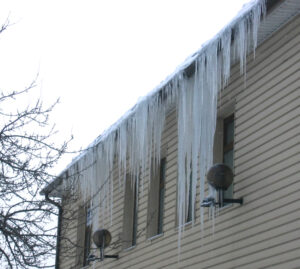
Do not forget the rainwater system
Before winter, clean leaves, twigs and other debris out of the gutters and downpipes. If water cannot drain freely, it freezes and can deform or even tear down the whole rainwater system.
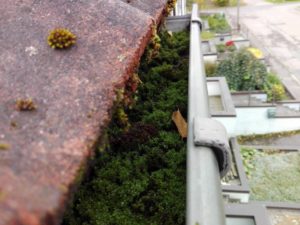
Round rainwater system →Square rainwater system →
How to reduce the risks in winter?
- Check the condition of the roof regularly.
- Clean the gutters before winter.
- Install snow guards where snow could endanger people.
- Use roof ladders and roof walkways for safe access.
- If needed, remove excess snow in good time.
Snow guards →Roof ladders →Roof walkways →
Need advice?
TOODE specialists will help you choose the most suitable roof safety elements, snow guards and rainwater system for your building.
Frequently asked questions
Does snow always need to be cleared from the roof?
No. It depends on the roof structure, the weight of the snow and the technical condition of the building.
Do icicles mean the roof is poorly insulated?
Very often – yes. They usually indicate heat loss or insufficient ventilation.
Why should gutters be cleaned?
Blocked gutters encourage ice to form and can be deformed under the weight of snow and ice.
Do all roofs need snow guards?
They are especially recommended above entrances, paths, terraces, garages and wherever sliding snow could be a hazard.
Are roof ladders and roof walkways necessary?
They provide safe access for roof maintenance and help you carry out cleaning and maintenance work safely.

