Standing seam profile + DRIPSTOP SOUNDCONTROL
Price from 13,01 € / m² incl. VAT10,75 € / m² excl. VAT
Excl. VATIncl. VAT
The price depends on the coating, material thickness and quantity ordered.
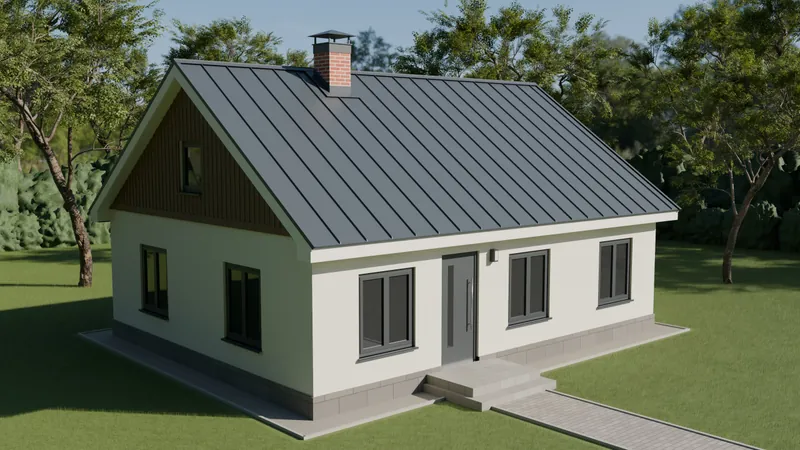
Classic house, Standing seam profile, RR23 Dark grey See how it looks on a house Standing seam profile in the roof visualiser - choose the colour, rainwater system and accessories.

Toode standing seam profile with SoundControl – high-comfort metal roofing

The Toode standing seam profile with SoundControl is a modern roofing with an integrated sound-absorbing and condensation-absorbing material that raises the comfort, stability and performance of a metal roof.

Metal roofs already offer high strength, long life and reliable protection from the weather. SoundControl technology adds improved acoustic comfort and extra moisture control, making the roof system even more complete.

This is new in the Toode range and is ideal for anyone who wants a premium roof with a higher level of comfort and extra technical benefits.


Improved acoustic comfort – up to 35-40% less noise

The SoundControl material absorbs the vibrations created on the roofing surface during rain or hail, reducing the transmission of sound into the roof structure.

This reduces the noise level in the rooms under the roof by about 35-40%, giving even higher acoustic comfort than standard solutions.

This benefit is especially valuable for homes, loft rooms and buildings where maximum long-term comfort matters.

dripstop soundcontrol toode


Extra condensation control and protection

The SoundControl material also works as an extra condensation-absorbing layer, helping to keep the roof structure drier and reducing the effect of moisture on the underside of the roofing.

The material can absorb up to 2.5 litres of moisture per square metre, which later dries out gradually through ventilation.

SoundControl does not replace a breather membrane – it works as an extra layer of protection, improving the overall moisture control and operating safety of the roof system.

A correctly built roof system with an underlay and SoundControl gives the best long-term protection and stability.


Improved roofing stability and visual quality

The SoundControl material increases the structural stability of the sheet during profiling and installation, which helps to give a more even, smoother and visually better roof surface.

It improves the overall resistance of the roofing to vibration and wear, keeping the roof looking good in the long term.


Available SoundControl widths

The Toode standing seam profile with SoundControl is available with two material widths:

  • 400 mm – for maximum sound absorption and extra moisture control
  • 150 mm – for improved comfort and extra moisture control with optimal use of material

Both versions give extra comfort and improve the performance of the roof system.


Introductory offer

The Toode standing seam profile with SoundControl is a new product in our range and is currently available at a special introductory price.

For an individual quote, technical advice or more information about the available solutions, please contact our sales team.

Contact our sales team →


See also other SoundControl and DripStop solutions

SoundControl technology is also available for other roof profiles, giving extra acoustic comfort and anti-condensation protection for different projects.

Classic profile with SoundControl →

TP20 with DripStop Original →

A standing seam roof is the most durable and watertight metal roofing, and it has been used for centuries. The sheets are joined without through-fixing screws – they are seamed together with a special tool and fixed to the battens with clips. The result is a monolithic, sealed roof that, when properly installed, can last 80-100 years.

Technical specifications of the standing seam profile


Standing seam profile cross-section and dimensions

Use Roofing, facades, walls
Material thickness 0,50–0,60 mm
Profile height 28 mm
Cover width 540 mm
Coatings Galvanised (DX51D, TSP), Matt Pol, Pural BT, Pural BT Matt, PVDF
Minimum / maximum profile length 500–25 000 mm
Minimum roof pitch 8° (1:7 from horizontal)

General information

A standing seam roof differs from other metal roofing in the way it is joined: the sheets are not fixed with screws through the surface, but are fixed to the battens with clips and joined to each other by seaming – the edges of the sheets are folded together with a special tool to form a standing seam. This means that the finished roof has no holes or screws that could let water in.

SIA Toode can also make standing seam sheets right on the customer’s site with mobile production machines. This makes it possible to produce sheets up to 25 metres long – with no joints along the whole length from eaves to ridge, which is the best solution for especially long roof slopes. Sheets made in our factory also have no joints, which is another guarantee of watertightness.

A standing seam roof is also suitable for facades and vertical walls – there is no strict upper limit on the pitch, and it can be used even on fully vertical structures.

The standing seam profile is also available with a factory-applied sound-absorbing layer – Standing seam profile with SoundControl →

A properly installed standing seam roof can last 80-100 years or even longer. Its lifespan is determined by two main factors: first, the joint is sealed without through-fixing screws; second, the clip fixing system lets the sheets expand freely with temperature changes, preventing material fatigue. Proper maintenance and prompt repair of any damage ensure the longest possible lifespan.

The minimum recommended pitch is 8° (1:7 from horizontal). This is lower than for many other types of metal roofing, because the seamed joint practically does not let water get under the sheet. On a very low pitch, it is important to make sure the battens are correct and all abutments are sealed.

Sheets up to about 12 m long can be transported from the factory without difficulty. For longer sheets (up to 25 m), however, mobile production on site is the best option – it avoids the risks of transport (damage or deformation of the sheets) and guarantees the exact length with no joint along the whole length from eaves to ridge. SIA Toode offers this service.

Installing a standing seam roof requires a qualified roofer or sheet metal worker with experience of this kind of work and the right special tools – seaming tools. Incorrect seaming can compromise the watertightness of the roof. SIA Toode can recommend experienced installers.

Yes – a standing seam roof is one of the few types of metal roof allowed by the protection requirements for historic buildings. A galvanised standing seam roof is a traditional material found on many historic buildings in Latvia.

For a complete standing seam roof, in addition to the sheets you need a clip system, a set of flashings and fixings. All flashings are available in the matching coating and colour, so they look the same as the sheet surface.


Standing seam roof flashings - full diagram

Flashings

Clips (concealed fixing clips)

Clips are the main fixing element of a standing seam roof – they hold the sheets to the battens. The clip is screwed to the batten and then seamed together with the edge of the sheet, so it is hidden inside the standing seam. The clips cannot be seen from outside on the finished roof. They have a built-in movement compensator that lets the sheets expand and contract freely with temperature changes without subjecting the material to mechanical fatigue. Consumption: about 3-4 clips per metre of sheet length.

Ridge

Closes the standing seam roof at the ridge, keeping water, dust and insects out from under the roofing. The ridge is adapted to the roof pitch and fixed to the standing seams or the ridge battens. Overlap along the ridge – at least 100 mm.

Eaves flashing

Installed before the sheets. It determines the shape of the sheet hem at the eaves and leads water into the gutter, while also protecting the roof structure from moisture. The straightness of the outer edge of the eaves flashing is critical – the alignment of all rows of sheets depends on it.

Verge

Closes the side edge of the standing seam roof, wrapping around the side edge of the sheet and turning water back onto the roof. The end flange is folded up and fixed with screws to the barge board.

Overlap between verge flashings – at least 50 mm.

Valley

Keeps the roof watertight in the valley. On standing seam roofs, valleys are made with extra-wide valley profiles, because this is where the most water collects. Overlap between valley pieces – at least 200 mm; installed from the bottom up.

Abutments (wall flashings)

Make a watertight joint between the standing seam roof and a vertical wall – at a chimney, a dormer wall or another vertical structure. The top edge of the abutment flashing is inserted into a groove in the wall and filled with a durable sealant.

Fixings

Element Use Consumption
Clips Fixing the sheet to the battens ~3–4 pcs/lm
3.9×30 mm screws Fixing the clips to the battens 2 pcs per clip
4.8×28 mm screws with sealing washer Fixing flashings to the sheets and battens ~5 pcs/lm

The clip has a built-in sliding mechanism – the sheet can move freely lengthwise inside the standing seam, while it is held firmly in place crosswise. With a temperature difference of 60 °C, a metal sheet can expand by about 0.6-0.7 mm per metre of length. For a 10-metre sheet that is 6-7 mm – and the clips fully compensate for this movement without any stress in the material.

We recommend ordering everything at the same time to guarantee that the colour and coating match. The flashings can be made from the same material as the sheets, so the colour match is more accurate when ordered in one batch.

Yes – the smooth surface of a standing seam roof is very slippery, so snow guards are essential on roofs above entrance doors, footpaths and parking spaces. SIA Toode offers snow guards that are fixed to the standing seams without affecting the watertightness of the sheet – see the product catalogue.

This profile is available in the coatings listed below. The properties of each coating – thickness, corrosion and UV resistance, galvanising and warranty – are compared under Metal roof coatings.

Colour chart

The table shows which colours each coating is available in. Colours on screen are approximate – for an exact choice, ask for physical colour samples.

RR11 - Dark green
RR20 - White
RR21 - Light grey
RR22 - Grey
RR23 - Dark grey
RR2H3 - Anthracite
RR29 - Red
RR32 - Dark brown
RR33 - Black
RR40 - Silver metallic
RR41 - Dark silver metallic
RR750 - Brick red
Zn - Galvanised
AlZn - Aluminium-zinc
* Approximate colour samples

Colour / coating table

MATT POL PURAL BT PURAL MATT BT PVDF Natural metal
RR11 ●
RR20 ●
RR21 ●
RR22 ●
RR23 ● ● ●
RR2H3 ●
RR29 ●
RR32 ● ● ●
RR33 ● ● ●
RR40 ●
RR41 ●
RR750 ●
Zn ●
AlZn ●

If the roof is left with a natural metal look, the better quality is TSP steel with Z350 galvanising. If you want a coated finish and the highest protection – Pural BT or Pural BT Matt (RC5+). PVDF is recommended for prestigious or public buildings where colour retention is especially important.

DX51D and TSP refer to the steel base, not the amount of zinc – the galvanising can be Z275 or Z350. DX51D is a widely used formable steel grade for construction profiles and parts. TSP is an SSAB material designed specifically for sheet metal work and complex bending: it has very good formability and minimal springback, so standing seams come out more precise. More under Galvanised steel.

PVDF coating contains fluoropolymer molecules that are highly resistant to UV radiation. As a result, the roof keeps its original brightness and depth of colour much longer than with polyester or even polyurethane coatings. This is especially important when the roof must look the same for decades.

PVDF coating is produced in a limited range of colours. RR40 (Silver Metallic) and RR41 (Dark Silver Metallic) are metallic shades that the PVDF base reproduces especially accurately and lastingly. If you need PVDF in another colour, contact our sales department – an individual order is possible in some cases.

An individual order is possible in some cases. Contact our sales department with the colour code you want – we will assess the options and the minimum order quantity.

A galvanised standing seam roof in its natural shade is the classic choice, suitable for both modern and historic architecture. Of the coloured coatings, the most popular are RR33 Black and RR2H3 Anthracite in Pural BT Matt – they emphasise the minimalist lines of the standing seams.

In this section you will find the most important documents for the standing seam profile – the declaration of performance, guidelines for receiving and storing materials, and a special document on storing galvanised steel correctly. Most documents are in Latvian.

Declaration of performance (DoP)

The document behind the CE marking, confirming that the standing seam profile complies with the European construction standard. The declaration lists the main performance characteristics of the material, the applicable standards and the scope of the manufacturer’s responsibility. The document is needed for the technical documentation of the project and for building permit applications.

Download DoP (PDF) →

Information on receiving and storing products

The document describes how to receive the delivered sheets correctly, what to check on delivery and how to store them before installation. Following these guidelines keeps the material warranty valid and prevents damage to the coating during transport or storage.

Main principles: store the sheets on crossbeams at least 20 cm above the ground; coloured sheets in sealed packaging – for no longer than four weeks; galvanised sheets – for no longer than one week. After these periods, make sure air can circulate between the sheets.

Download the guidelines (PDF, LV) →

“White rust” on galvanised steel

This document is especially important if you have chosen a galvanised standing seam profile (DX51D or TSP). It explains what “white rust” on galvanised steel is, how it forms in sealed packaging in a humid environment and how to prevent it. White rust does not always mean permanent damage, but it significantly speeds up the depletion of the zinc layer.

Download the document (PDF, LV) →

Yes – the SIA Toode standing seam profile has CE marking and a declaration of performance. The document can be downloaded above in this section.

Installing a standing seam roof requires specialised tools and experience – it is not a typical DIY installation. The warranty is valid if the installation is carried out according to the SIA Toode guidelines and with suitable tools. Poor seaming can compromise the watertightness of the roof and the warranty.

Galvanised sheets in sealed packaging may be stored outdoors for no longer than one week. In damp or cool weather, white rust can form within a few hours. That is why galvanised sheets should be stored dry indoors or installed immediately after delivery. For more information, see the document “White rust on galvanised steel”.

Additional documentation for specific projects – detail drawings, material specifications, additional DoP information – is available from our sales department. We will provide all the documentation you need.

A standing seam roof is the most durable and watertight metal roofing. A properly installed standing seam roof can last 80-100 years or longer. The sheets are joined with a seaming tool – the edges of the sheets are folded into each other, forming the characteristic standing seam. The sheets are fixed to the battens with clips – no fixing element is visible from outside on the finished roof. This design means the roof works as a single monolith without any perforations.

Uses of the standing seam profile:

  • Family houses
  • Apartment buildings
  • Public and office buildings
  • Historic buildings where only standing seam roofing is permitted
  • Facade and wall cladding

SIA Toode can make standing seam sheets right on the customer’s site with mobile production machines. This makes it possible to produce extra-long sheets – even sheets up to 25 metres can be made to a high quality without damage, because there is no transport risk.

The standing seam profile is also available with a factory-applied sound-absorbing layer – Standing seam profile with SoundControl →


Installation summary

Installing a standing seam roof requires a special seaming tool and an experienced sheet metal worker or roofer. Below is a summary of the main installation stages. When you order the standing seam profile from SIA Toode, we can recommend suitable installers.

Delivery and storage

When receiving the goods, check that all ordered materials have been delivered and that there is no transport damage. Damaged materials must not be installed!

  • Store the sheets on crossbeams at least 20 cm above the ground.
  • Coloured sheets in sealed packaging – for no longer than 4 weeks.
  • Galvanised sheets in sealed packaging outdoors – for no longer than 1 week, because white rust can form in damp weather.
  • Lift the sheets with a crane or one at a time from the side – do not push or drag them, as the sharp edges can scratch the surface underneath.

Roof deck and battens

A standing seam roof has strict requirements for the flatness of the battens. Before starting work, check the general condition of the load-bearing roof structure, the strength of the rafters and the straightness of the roof plane.

  • Underlay: required for all insulated metal roofs. Follow the underlay manufacturer’s instructions.
  • Counter battens and battens: counter battens min. 22×50 mm (32×50 mm recommended); for the battens – dry timber, min. 22×100 mm (32×100 mm recommended).

Installing and seaming the sheets

Installation of a standing seam roof starts by fixing the eaves flashing to the first batten.

  • The first sheet is aligned parallel to the eaves and fixed to the battens with clips. The clip is screwed to the batten with 2 screws and then seamed together with the edge of the sheet.
  • Each following sheet is placed next to the previous one and seamed with a seaming machine (electric or manual). A double standing seam is formed – it gives the highest watertightness.
  • Only step on the flat surface of the sheet between the standing seams – never on the seams themselves.
  • The top end of the sheet at the ridge or an abutment is closed with the appropriate flashing – the way the sheet edge is turned up depends on the specific joint.
  • Seaming must be done from the bottom up – from the eaves to the ridge – without stopping, so that the standing seam is even along its whole length.

Sound absorption

Standing seam sheets are fixed at their edges, so the middle of the sheet can vibrate in strong wind. To prevent this noise, sound-absorbing strips can be installed under the sheets (from the second batten to the last one before the ridge). Alternatively, order sheets with the factory-applied SoundControl layer, which is the most convenient and effective solution.

Installing the flashings

  • Eaves flashing – installed before the sheets; the straightness of its outer edge is critical for all further work.
  • Valley – installed before the sheets, from the bottom up; overlap at least 200 mm.
  • Verge – installed after the sheets, from the bottom up; overlap at least 50 mm.
  • Abutment – at a wall or chimney; the top edge is set into a groove in the wall and filled with sealant.
  • Ridge – installed last; overlap 100 mm; do not join with screws in the overlap area.

Cutting and safety

Use tin snips or other non-abrasive tools to cut the sheets. Never use an angle grinder with an abrasive disc – the sparks damage the coating and cause corrosion at the cut edges. Brush away metal filings immediately after cutting.

Always wear work gloves, soft-soled shoes and protective clothing when working. Never stop a sliding sheet with your hand – its edges are sharp and can cause deep cuts.

Maintenance and cleaning

A standing seam roof needs minimal but regular maintenance. At least once a year (preferably in spring), clear leaves, pine needles and other organic material from the roof – this slows down the depletion of the zinc coating. Check and clean the gutters and outlets regularly. Clean the surface with warm water and a soft brush; a pressure washer can also be used. Do not use solvents or other aggressive chemicals. Cover any damaged spots with touch-up paint in the matching colour.

Installing a standing seam roof requires specialised seaming tools and knowledge of seaming techniques. Incorrect seaming – a seam that is too weak or not pressed tightly – can let water get under the sheet. That is why we strongly recommend having the roof installed by an experienced sheet metal worker or roofer.

The cover width of the standing seam profile is 540 mm. For a 100 m² roof with, for example, 6 m long sheets, you need about 31 sheets (100 ÷ 0.54 ÷ 6 ≈ 31). We recommend doing the exact calculation with our specialists, taking into account the shape of the roof, offcuts and overlaps.

It depends on the coating. Pural BT and Pural BT Matt can be worked from −15 °C; PVDF from −10 °C; Matt Pol from 0 °C. Galvanised steel has no coating temperature limits, but seaming in the cold needs more care, because cold metal is stiffer and less flexible.

Yes – although a standing seam roof is the most durable type of metal roof, it is not “maintenance-free”. Regular cleaning of organic deposits (leaves, needles, moss) and checking the rainwater system at least once a year significantly extend its lifespan and prevent premature depletion of the zinc coating caused by corrosive deposits.

Yes, because the smooth surface of a standing seam roof is very slippery. Snow guards are essential above entrance doors, parking spaces and footpaths. There are special snow guards for standing seam roofs that are fixed to the standing seams without making extra holes in the sheet – see our range of accessories.